Sunday, July 21, 2013

Do It 'til It Hurts: Tour de France 2013 (Pt. 2)

Greg LeMond was "the American" in the Tour de France during the 1980s and early 90s - even though there were other Americans in the Tour during those years - most notably Andy Hampsten and Davis Phinney for the U.S., not to mention usually solitary Americanos - Colombians, Panamanians, Brazilians, Costa Ricans, Mexicans - as well. All of them Americans, too, but never mind, we'll come to that.

Raul Alcala (MEX), Tour de France, 1993

The Tours of the 21st century, since the great Indurain retired, have been dominated by U.S. riders - Lance Armstrong's consecutive victories, followed by Floyd Landis's recalled victory in 2006 - a pretty amazing national run for a country that rode balloon tires until about 1970, and where cyclists are still regularly run off the road for fun.


And of course we still remember the Tylers (Hamilton and Farrar), Hincapie, Leipheimer and Zabriskie - retirees now, some of them witnesses for the Armstrong prosecution, all either disgraced, semi-redeemed by confession or by prosecutorial immunity. But as any good Calvinist will tell you, there's no such thing as semi-redemption. Paradise and a permanent place in the record book are granted neither the partial hero nor the confesser.

Last year's Tour, if you were wishing for something completely different, was won by Bradley Wiggins, the first Brit in history to win it. This year's Tour has by now been won by his teammate, Chris Froome, an Anglo-African born in Kenya. The runner up, wearer of the King of the Mountain polka-dot jersey and the Best Young Rider's white jersey, is Nairo Quintana, a rookie Colombian rider. (The Colombians, whether by some genetic marker or cultural mandate, ride for the polka-dots and usually get them.) The only other Colombian in the Tour, Jose Serpa (another rookie), will finish in the top 25 riders.

The U.S. had six entrants in the opening stage this year. Two (van de Velde and King) have dropped out, and Andrew Talinsky will probably finish a respectable (Schleck-like) tenth. Not exactly dominant. I have to wonder whether U.S. supremacy in the post-Indurain era was largely due to Armstrong's religious enforcement of team doping, and to what must have been an expensive and pervasive secrecy that involved the UCI, the Tour sponsors, and broadcast agencies with which the latter held lucrative contracts. More than I know, but it suggests the grip Armstrong had on the sport if you see it that way.


The Colombians have been around, mostly invisible, since the mid-80s. Luis Herrera was probably the first to make his mark on the European tour - the first to win a Tour de France stage (L'Alpe d'Huez, '84); the first South American to win a Grand Tour (Vuelta a Espagna, '87); and only the second (after another great Spaniard, Federico Bahamantes), to win the King of the Mountain jersey in all three Grand Tours.

So Lance is hiding out in Austin; CadelMageddon is over; los Estados Unidados are either in temporary, post-pharamaceutical disarray or are reverting to our own cultural mandate . . .


So I'm basically keeping my eye on Quintana and the Colombians these days. All two - or three? - of 'em.

A bunch of Colombians

Wednesday, July 17, 2013

Amnesiac American Wakes Up Swedish

Sounds like something from The Onion. But no, there's the headline big as 64-point font, in no less a publication than The Guardian: "American man wakes up with amnesia speaking Swedish." It appears that a California sexagenarian (stop it, I know what you're thinking) named Boatwright, who has spent time in Sweden, was found unconscious in a Palm Springs motel room. On waking up in the hospital, he began speaking in Swedish and claimed to be none other than Johan Ek.

"Sudden, unplanned travel"

In March, doctors diagnosed Boatwright with transient global amnesia, a condition that can last for several months and is triggered by physical or emotional trauma. The rare mental disorder is characterised by memory loss, "sudden and unplanned travel," and possible adoption of a new identity.

Lucky devil, I thought when I read this tale of a lost self. It's not that I'd want a new identity particularly, having grown so accustomed and (if I may say so) complacent with my own. It seems to suit me right down to the ground, so much so that I've been tempted more than once to "like" myself on Facebook.

But it strikes me that if some chap who's roughly my age can doze off in a motel room in the course of "sudden and unplanned travel," and immediately upon awakening launch into the Swedish tongue, what new vistas might await an amnesiac Miguel? It reminds me of the one about the fellow who sustains a head injury, and on coming to he asks the doctor if he'll ever be able to play the piano again. "Why, I don't see why not," the doctor assures him. "Great," answers the fellow, "I've always wanted to be able to play."

The story sets a man thinking: if amnesia were to blot out the familiar, the tried and true, the old accustomed Miguel, what new skills and talents would I wish to discover in myself? I'm not sure about being able to speak Swedish. Greek and Latin tempt me. But if I could speak and write in Urdu it would have been worth the trauma of losing my mind.

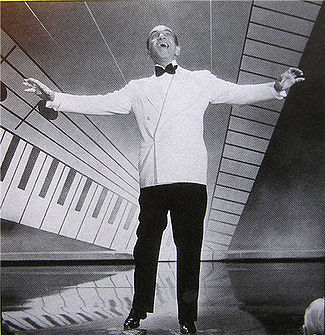
Another thing that appeals, having been unmusical through the years, is a musical skill of some sort. Not just the usual thing - you know, becoming popular among a wide circle because I can unaccountably play "Roll Out the Barrel" on the harmonica or the accordion - no, here's a chance to think in larger terms.

"Pull out my stops, big boy"

I'm certain I wouldn't want to come to consciousness as a pastry chef, let's say, or an accountant. But I'd not mind taking a page from Boatwright/Ek, who was a medieval history buff, and come back around as an expert jouster . . . 


. . . or an ace fighter pilot . . .


Ace fighter pilot

. . . or better yet, an ace fighter pilot who's also a European aristocrat of the old school.

Le Baron Rouge

It's possible I'm getting beyond myself here, letting the old imagination run rampant as my days wind quickly into senescence. I can see how this would unfold. A good whack on the cranium, a longish doze in the hospital, and I know how I'd wake up.

Tuesday, July 16, 2013

The Six-Day Race (Pt. 3)

[From a manuscript purported to be among the literary relicts of the estate of Raymond Chandler, creator of the private investigator, Philip Marlowe. Chandler died in 1959. In observance of the 2013 Tour de France which commenced this July, as it does each year.]

  The Six-Day Race


Why do they call it Aspen? I asked the barmaid. She blinked at me like I'd asked her why a Kodachrome sky was green.

I'm sure it must be the aspen trees, she said. There are aspen trees everywhere out here, I shot back.

Real estate developers, she said after a pause. Save an elk, shoot a developer. I guess they thought it sounded cute. I figured she was probably right at that.

Then I flipped a photo onto the bar. Ever seen this guy? I asked. The barmaid glanced at it, shook her head and started to walk away. But I'd seen her do the double take.

Sure? I said, and laid a fin on the bar. She looked offended, like a debutante at a pig roast. Just for information, I explained. Oh, she said, and stuffed it somewhere in a shirtfront like a double nail bin in a hardware store.

He's been in a couple times, she said. That's all.

That's all? I asked. Know where he lives? Where I might find him?

He's not local, she answered. I think he's in the medical trades, pharmaceutical, something like that. What I've heard, anyway. I think his name's Ben.

Any last name? I asked.

Dizz  . . .  Dizzrailer, I think. Or maybe Derailler. Like some bicycle part, what I was told.

Disraeli? Benjamin Disraeli? I asked. Yeah, something like that, she said. Know him?

He was the prime minister of England, I said. Really? she said. She seemed mildly impressed. I figured I was in Aspen, so I let it go at that.

One other question, I said. Did you ever see him buy a bag of blood?

Jees, she exploded like a steam grate, we're not all preverts out here, ya know.

That's the last impression I'd want to leave you with, miss, I said. I just need to know who you've seen Ben with in the last 24 hours. A doctor, local vet? Anyone?

The barmaid (by John Brack)

Well OK, but don't get so mangy. So there's this guy named Stan he meets here when he's in town. I think that's his name.

Stan? I asked. So a last name?

Baldwin, she said after a minute. Yeah, Stan Baldwin.

As in Stanley Baldwin? I said.

I suppose so, she said. Stanley, Stan. Is it a big deal?

He was the prime minister of England, I said, not to anyone in particular.

I've heard they have bad blood in the royal family over there, she said absently.

Bad blood, I repeated.You mean hemophilia?

Well, yes - homophobia, I've heard. One of those.

And all the time I'd been thinking just bad teeth. Honey, you may have given me some daylight here, I said, and walked back along the blazing sidewalk to the Buick.
.
The Buick

I had the motor idling and flared a match to fire up a smoke when I saw the sign just a block down - Ye Olde Pork Pie Shoppe. Begorrah! I muttered in a brogue as phony as the joint in question.


I shut off the engine, pocketed the key, stubbed the cigarette, strolled back down the sidewalk and in through a front door grimed with smoke and disuse. That probably meant that the back door was the entry of choice for this clientele. The first thing I could make out in the musty interior was a pastry case with about three pork pies lounging in the back, covered in more dust than a miner. I'd never seen a pork pie before, and these particular samples weren't a compelling advertisement for the culinary merits of the genre. I'd been thinking about lunch until that moment.

Something emerged from a curtain behind the pastry case and into the murky light of the joint. May I assist you? asked a fruity voice.

I'm looking for Stan, I said.

I am Stanley - how might I be of service? the voice asked. My eyes were adjusting to the dust and the dim light, and I could barely make out an aging chap in a tweed jacket, a starched white shirt and an ascot that hid more chins than a Chinese phone book. He was wearing tassel loafers. I reminded myself that this was Aspen.

Stanley Baldwin? I asked.

And to whom do I have the honor of being unintroduced? he purred.

Sorry, I said, immediately sorry I'd apologized. Name's Marlowe. Philip Marlowe, from Los Angeles. I'm a private detective and I've been engaged to track down a cyclist who's gone missing from a six-day at the Coliseum. I've heard him called Clement Atlee . . .

Oh dear, said the fellow behind the pork-pie case, Clement's been retired now for years - went to Majorca, I understood.

Clement Atlee, "a sheep in sheep's clothing"

I wouldn't know about that, I said. He was seen four days ago, two days into a six-day in L.A.

Are we speaking of a different fellow, perhaps? asked the fruity voice. I flipped the photo onto the glass top of the pastry case. Oh, said the chap, and who might this be?

Not Clement? I asked. He shook a negative. What about Ben? I shot back.

Ben? he countered.

Ben Disraeli, I barked. He go to Majorca as well? Not with the family silver, I hope.

Oh, really, Mr Marlowe, the Ascot chuckled. I have only the highest regard for Mr. Atlee and the deepest reverence for the memory of Mr. Disraeli. But surely, surely you're not aware of the identities of England's illustrious own. This photograph is of some Lower Midlands tout, I wager, one who may well have absconded with some family's silver. Though I doubt it would have been his own family's.

Know anything about blood? I asked him.

Blood, he mused. Blood . . . you mean as in blood lines, families, that sort of thing? Like in Debrett's Peerage?

Not like that, I said. Like in quart bags. For sale.

The chins stopped waggling for a moment and then the Ascot looked thoughtful. You must be mad, he said at last.

I've heard there's some demand for blood over on your side of the Atlantic, I said. Among the highest circles of government, if you see what I'm driving at.

Oh, surely . . . he spluttered . . . you can't believe everything you read in the San Francisco Chronicle. Or is it the Sacramento Bee?

L.A., I corrected him. But I was buying time because by now I'd figured out that the bad blood angle was a false scent. I thought I'd recognized this guy when he oozed out from behind the curtain back of the counter, and I finally made his mug. His name, or his stage name, was Desmond Desmond, a B-movie walk-on, the type the Hollywood geniuses always cast as a snotty butler or a continually outraged father-in-law in cheesy society dramas that feature types whose rooms are awash in white drapery and who go to night clubs with Busby Berkeley floor shows, skinny cigarette girls and Latino crooners.


I'd also seen a refrigerator behind that plastic curtain, and while the Chin was spluttering about the purity of the royal house I'd also seen a guy with hips like a snake's, fishing out a bag of what could have been raspberry jam. Or enhanced blood. From where I stood, I couldn't be sure which. Anyway, I figured that whatever they were up to was probably more weird than it was illegal. Besides, I figured, I'm in Aspen. Who cares what goes on here?

I walked back down the sidewalk to the bar and bought a roll of dimes, then went into the phone booth to call Lafferty. I didn't have anything to tell him except I was finished with the case and thanks a lot for the trip to Aspen. He picked up after about four rings. I'd probably woke him from a doze. I asked him if there'd been any sightings of Clement Atlee back on the Coliseum track.

Yeah, said Lafferty. He finished the six-day yesterday, came in first, I hear. Hey Marlowe, did you know he used to be the prime minister of England?

I heard something like that, I said. I just let it go. I figured it was only Lafferty.

The young Lafferty

Do It 'til It Hurts: Tour de France 2013 (Pt. 1)

In Sunday's fifteenth stage of the current Tour de France, Team Sky's Chris Froome went off like a shot seven kilometers from the summit of Mont Ventoux, finishing a half-minute ahead of the young Colombian Nairo Quintana to take the stage and the polka dot King of the Mountain jersey. He kept as well the yellow jersey with a four-plus minute lead overall. It was an amazing performance. Ventoux is the mountain that, in the 1967 Tour, conspired with the heat and a lethal mix of alcohol and amphetamines to kill the British rider Tom Simpson, whose memorial now stands on its slope.

 Froome in front

Some genius of the sporting press inevitably compared Froome to Armstrong, who has also gone up Mont Ventoux like a shot in Tours past, leaving a scattered and demoralized field of riders to sort things out below. "I'm going to take that as a compliment," was all Froome said in reply.

Armstrong has left a scrambled and confusing legacy - amazing rides, Tour victories that are no longer on the record but survive in countless digital and human memories. His pharmaceutical regimen aside, Lance was one of the greatest riders. When he was younger he was merely "brash." As he aged and grew to the status of a legend, brashness turned into arrogance, his general nastiness a cover for the fact that he had something to cover. Still, Travis Tygart and USADA only managed to uncover Armstrong's defects of character. They couldn't alter the facts - that he was an amazing cyclist, a dominant figure in Tour history despite his palpable removal from the books.

Froome is no Armstrong - meaning that he is diffident, quiet, and most probably clean. And coming from a 28-year-old, his rejoinder was a wonderfully terse mot juste, encapsulating at once a good bit of class, a mature presence of mind, and the judgment of history on Armstrong. Nothing more to be said, really.  

 Alberto Contador chases Andy Schleck up Mont Ventoux, 2009

Monday, July 1, 2013

What We Need Before We Go

"I want an official Red Ryder carbine-action 200-shot Range Model air rifle!"
                  (The correct answer to the question, "Ralphie, what would you like for Christmas?")


In every life, the world divides pretty neatly into all the things you need . . . 


. . . the things you think you need . . .

(Pick one)

. . . the things you definitely don't need . . .

Doughnut burger

. . . and the one thing you need to own before you die. This thing is different for different people, of course, and (except in cases of severe developmental problems) it alters over the span of a single person's lifetime. So while Ralphie may have wanted a Red Ryder air gun in his nonage, his middle years may have felt hollow for want of a Ferrari Testa Rossa 250, let's say . . . 


. . . or a cellared flagon of Pomerol in the proper year . . . 


. . . both of which I have hankered after at various times of life, though for want of $16.4 million my Ferrari lust was bound to be unrequited. I knew it, and knowing it cooled my ardor after a time. 

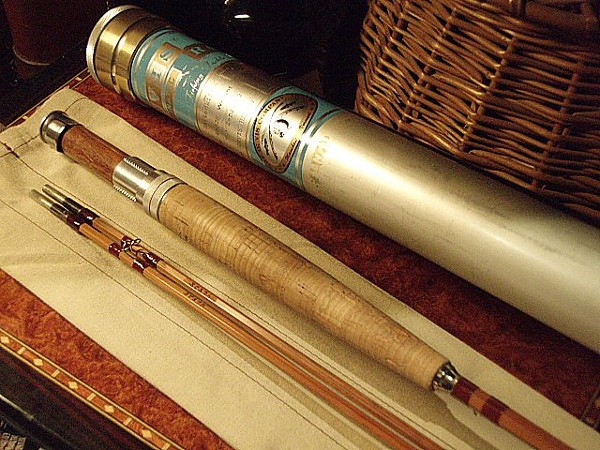
Still, there remains a bit of Ralphie in every geezer and Miguel is no exception. Idly searching the flyrods on Craigslist one dreary day in April, I chanced on an Orvis Battenkill two-piece Bakelite-impregnated seven-and-a-half foot six-weight with (not a compass in the stock, but) an Orvis Hardy-built CFO fly reel - all in immaculate condition. I said it all over again quickly, to myself, as though I were Ralphie answering The Question: "Ralphie, what would you like for Christmas?"


Nearly three months later I met its original owner and keeper of the tube on the main street of a Denver suburb. A stranger carrying an aluminum fly rod tube is no longer a stranger so far as I'm concerned. Not to mention that he stood out, as Raymond Chandler once wrote, "like a kangaroo in a dinner jacket." We walked to a park bench across the street, I unscrewed the cap to the tube, slid the rod sections out of their pouch, checked all the serial numbers (they matched), slipped one of the tips into the ferrule on the butt section, looked along a true span of Tonkin cane, and flexed it in a liquid arc above both our heads. The rod bent into a perfect bow behind and flexed forward in a mirror image. It felt fluid and powerful at once, much as I once might have said of a properly tended Chateau Petrus that it possessed both firmness of structure and delicacy of finish. 

So I handed over my envelope of cash, screwed the cap onto the tube, gathered up my Hardy-built reel (Hardy, the reel maker with the royal warrant) and drove back down the interstate and home. This was yesterday. In one of life's cruel ironies, I'm in Kansas today and rising trout are thin on the ground out here.

Tuesday, June 11, 2013

The Six-Day Race (Pt. 2)

[From a manuscript purported to be among the literary relicts of the estate of Raymond Chandler, creator of the private investigator, Philip Marlowe. Chandler died in 1959. In observance of the 2013 Tour de France which will commence this July, as it does each year.]
  
The Six-Day Race


The afternoon was sweltering.  The smog hung around like a fat dog outside my office in the Cahuenga Building.  I had the door to the inner office locked and the buzzer in the outside waiting room turned on, in the increasingly rare event that a paying client might walk in. I had the blinds drawn shut so I wouldn't have to watch the bricks in the wall outside my fourth-floor window shimmer in the heat. If my office were in Europe I would have been on the third floor, not that it would have helped the climate, or made the elevator ride any shorter. Or the rent any cheaper, for that matter. 

I had just set the office bottle and a clean glass onto the dust on top of my desk when the phone rang.  Lafferty’s voice gargled over the line like a strangled walrus on a Hawaiian ice floe. I could barely hear what he was saying for the whirr of the oscillating fan  You got anything for me, Marlowe?  I’ll take anything you found out. I need something.

How about a roundhouse to the jaw? I asked him. I asked nicely. Women tell me I generally ask nicely.

Don’t push me, Lafferty growled.  I got some pressure here. The boss thinks there’s maybe some kinda ring or somethin’.  Like a dope ring, maybe gang stuff, maybe kidnapping, smuggling. 

You left out the sex trade. That’s a pretty broad brush, Lafferty.  It’s not gangs, not kidnapping – the guy’s been seen on the street.  I don’t think he’s done anything illegal.  Yet, anyway.  But you’d be the best judge of that, I said, with a generous swipe of the soft soap.  

Lafferty grunted like a stuck bull in a tight stall. Not much help, are you Marlowe, he growled.   

Tell your boss you’re looking for a defrocked medico.  A doc who’s lost his shingle – busted, maybe for selling drugs, maybe for sticking up a blood bank, maybe some guy with veterinary aspirations who's been selling cow’s blood.  Which I guess is a pretty broad brush, but not so broad as yours.  And nothing illegal, that I know of.

I guess drinking blood ain't illegal, Lafferty admitted, but nobody said he was drinking anything. Drinking what you drink ain't illegal either. And you make it sound like the guy's a sicko.  A vampire.  We're talking about fruits riding bicycles, fer Chrissakes. They’re not shopping for blood, human or animal.  Do you think? Look at what they wear.  Talk to me Marlowe, I don’t like the sound of your smirk.

"Fruits riding bicycles . . ."

That’s what your boss said, I told him.  I guess these guys inject fresh blood for extra going power.  Like you might take a shot of rye, or a bit of strychnine in water, which in your case I recommend, Lafferty. But I don’t know anything except what I’ve been told.  Being a gimlet-and-scotch man myself, you understand. Or the occasional whiskey sour on a hot afternoon - it gives the Buick a nice pickup. But I probably shouldn’t mention that to a cop. Anyway, I’ve been talking to some people in what I’ll call related industries.

You don’t make this an easy job, Marlowe, Lafferty said, in a voice that sounded like a hymn at his mother’s graveside. You think I got it easy just ’cause I get a regular paycheck.

You’d be the best judge of that, I told him. I wouldn't know anything about a regular paycheck.

Yeah, said Lafferty, I'll send some flowers.
                                                                                                                           
 The Buick

I got home late that night with not very much to show for an empty gas tank and a pair of feet that were barking like tired Dobermanns.  I set up the chess board, poured a solid double scotch, and had just started to replay the 1947 Petrograd match between Kazurov and Burakovsky, when the telephone rang.  It was Eddie.  Marlowe? he started.  No, this is the Scarlet Pimpernel - who’s this?  It’s Eddie, he said.  Is Marlowe there?  Eddie, I snorted, you got a cheese blintz for a head?

Oh, it’s you, Marlowe, he said, brightening.  Yeah, I seen that guy, Clement.  After you left this afternoon. He was going in the alley door at Nunzio’s Trattoria, I’d say about 6:30 this afternoon. 

He’s been missing for almost 24 hours, I calculated out loud. Jesus, I wonder what it takes to get disqualified in a bike race? I think it takes a letter from your priest, Eddie said. Or from Jesus.

I knew the joint. Nunzio's was a ‘trattoria’ like a cathouse is a Methodist church.  It was a cocktail bar, one you could bring your dog into, if you had a dog, one of those joints that’s always changing names but maybe not owners, always ‘formerly’ something else, like ‘Nunzio’s (formerly Scarpone’s)’.   It was frequented by the bike racers and by the drug trade – shady doctors and defrocked medical personnel who still had their hands in hospital dispensaries and resold prescription junk out of alley doors and car windows.  

  The floor show at Nunzio's (formerly the 'Creole Palace')

If Atlee was tangled up with these guys there was no way he could test clean and stay qualified – unless he had either a lot of dough or a reputation as shiny as the seat of a bus driver’s pants, which I hadn’t heard he did have.  Either one, I mean.  The way I figured it, he wouldn’t be in six-day races if he was loaded with cash, and he wouldn’t be in Nunzio’s if he was clean.  He was down on both counts and all I had to do was find some guy who was dealing bags of blood. Shouldn’t be too hard to nail a guy like that in what you might say was a niche market.  

Are you selling anyone blood, Eddie?  I asked abruptly.  No, boss, Eddie whined.  I’m a normal human being.  Who would sell it, then?  I asked him.  Anyone you might know?

I had a guy try to move into my patch about two months back, Eddie remembered.  He couldn’t get a source.  But a coupla guys mentioned seeing him hanging around in the warehouse district by the slaughterhouses.  I never made no connection.  Until now, just putting two and two together. 

Thanks, Eddie, I said.  It probably won't help, but it better be true.  God’s honest, he chirped.  I heard he was a vet who lost his license working the cockfights.  That’s what I figured, I told him.

I thought it was time to pay a visit to Nunzio’s, so I showered and shaved in anticipation of needing another shower when I came out of there.  I had to brace myself at the door before I pushed it open. I walked through into the dark and the malodorous smell of stale smoke and spilled beer.  There were six or eight people in the place - a pair at the bar, the others sitting at tables back in the deep murk.  I walked up to the bar and the barman slouched over indifferently.  Can I get a fresh squeezed orange juice? I asked him.  Sure, he said, put some ice in a highball glass and filled it from a bottle of sickly yellowish stuff that was recuperating in the ice well.  I didn’t say anything, I just tossed four bits onto the bar and stared into the back mirror without picking up the glass.

I studied the other patrons.  The tables didn’t look like they were doing anything but killing time there, but one of the two guys at the bar interested me greatly.  He had that emaciated, insect-like body bike racers get when the little bit they have left for the track comes from amphetamines.  He looked edgy and hungry and maybe like he might be ready to spill something besides his drink.  I walked over and offered him a smoke.  He shook his head, looked at it, then took it. Don't take it on my account, kid, I told him.  I lit it for him and another one for myself.

 The other guy at the bar

You might be able to help me, I said.  He didn’t answer, so I took out a sawbuck and slid it under his glass like a bar napkin.  He brightened, seemed to become more cooperative.  You’re not in the six-day at the Coliseum? I asked.  Pulled a hamstring in a fall, he said.

There’s medicine can help with that, I said.  He said he couldn’t afford that kind of medicine.  Ever use speed? I asked him.  Naw, he told me.  Know any guys who might? I asked.  You a narc? he shot back.  I was making him nervous.  Not me, I told him.  I’m looking for a guy named Clement Atlee.  He should be finishing up the six-day but no one’s seen him.  You seen him around?

He looked up into the mirror behind the bar to see if anyone could hear or might be watching us, and when he didn’t see anyone, he shook his head.  Clement's gone missing before, in the middle of a race, he said, talking sideways out of his mouth.  He's got somebody tells him when they're going to do pee tests, blood samples, whatever.  He knows, he leaves.

Why don't they yank him? I asked.  Why do they let him back on the track?  You got a couple more of those napkins? he asked. I slid two more sawbucks under his glass and kissed them a long goodbye.

Because, whispered Insect Man, if Clement didn't race no one would show up in the stands. The place would be empty as Saturday night mass. He's that big a draw? I asked. I admit I was impressed. I'd never even bet on the guy. 

He's a good rider, said the kid, but he does some weird stuff - medical treatments, I guess. The guys on his team don't talk about it but everyone else knows what's going on. Chicken blood, I've heard, or something. I don't mean Jamaican stuff - voodoo, nothing like that. Cow's blood, could be. You can get it from a few doctors - what everybody calls doctors - but you gotta have some money behind you. Serious money. Like money from somebody whose name you probably maybe already know.

The racer's edge

Somebody here in town? I knew I was on to something and I knew that The Bug was about to shut down on me like a slow electric garage door. One more thing, I said as quickly as the thought came to me. Where does he go for these, uhh, treatments?

It ain't local, he said, glancing up at the bar mirror. It's someplace back East - Aspen, I think. Never heard of it otherwise.

There was only one Aspen I'd ever heard of - some little dump of a Colorado mining town where interior decorators, down-and-out architects, and the occasional savings-and-loan executive went to avoid the sodomy laws, construction liens or the tax man.  I knew Clement wasn't in Aspen. He'd want to finish the race. His backers would want him to finish the race in the correct slot, the slot they'd paid for. So Clement was still in town.

But I knew I'd be making a trip to Aspen on my own dime. I wasn't looking forward to any more cheesy overpriced diner food, or another paperboard room in a crappy motel full of highly buzzed ski trash in Jeeps.

(To be continued)

Monday, June 10, 2013

The Six-Day Race (Pt. 1)

[From a manuscript purported to be among the literary relicts of the estate of Raymond Chandler, creator of the private investigator, Philip Marlowe. Chandler died in 1959. In observance of the 2013 Tour de France which will commence this July, as it does each year.]

 The Six-Day Race


The phone by the bed jangled me out of a bad dream.  Better late than never.  I’d been dodging some rough customers, the kind who need a shave and a new haberdasher.  It was down around Mazatlan along the Cocaine Corrida, and I was driving too fast, trying to lose a Packard-load of thugs in cheap suits on the lane-and-a-half of a typical Mexican highway.  I can’t say I was sorry to wake up, even considering I’d emptied the office bottle and then some the previous evening.  But that was history now and I knew before I was fully awake I’d have to get reacquainted with my head for the rest of the day.

After a few fumbles I got the receiver right side up, just in time to hear Lafferty already in full throat, like the sound of a lathe cutting some mug’s headstone.  All I could think without coffee was, here we go again. Perfectly natural in the circumstances. The circumstances were Lafferty.

Aw, Lafferty, I groaned. It’s nine-thirty in the a. m. What can’t the entire L. A. police department figure out now?

Aw,  don’t 'aw Lafferty' me, Lafferty aw-Laffertyed me. We got a problem. You got a problem, more like it.

I wasn’t awake yet. There was something I wasn’t taking in. The Packard was still racing through the mists of my subconscious, making me wonder what I could have done last night.  Tell me about my problem, I moaned.

There’s a rub, Marlowe. I know you bet pretty heavy on those six-day races down at the Coliseum. So, three days in and a schmoe in funny shorts from the lead team goes past the concession stand, well in front.  By the turn he’s gone, kaput, disappeared, like an angel in the mist. You wouldn’t know anything about that, would you? Marlowe?


I could see Lafferty’s face as he talked, eyes like gumboils, big nose cratered like the fenders on a getaway car. It didn’t improve my hangover. Or my mood.

No, Lafferty, I wouldn’t know anything about that. You’re absolutely correct in your surmise. I was waking up now.

Aw, don’t go all Sherlock Holmes on me, Lafferty barked. I was impressed by his sudden ability to spot irony when it hit him in the kisser.

Look, I said. You know me well enough to know that I’m a sporting man. I wouldn’t take any bet I could fix. You already know that. So why are you calling at this hour?

There was dead silence on the other end, like when a humanitarian has just shot the neighbor’s barking dog at six a.m.  I didn’t figure it was you, Lafferty finally said.

Thanks, I said. Could you say that again, just a little louder and with some feeling?

Don’t push me, Marlowe. My point is, you know most of those dainty-legged types with the cowhide up their asses. Find out what you can and let us know, would you?

Why didn’t someone file a missing person report? I asked him. It’s not that, Lafferty mumbled. It’s probably kidnapping, or drugs or something like that.

Sure, I said. And where should I submit my expenses? And then there’s the matter of my considerable upkeep.

The LAPD does not forget its friends, Marlowe, Lafferty said in a plangent whisper. He sounded like he was lying to some woman on a dance floor.

I almost teared up. You mean you won’t hassle me too much when another one of my clients turns up in the morgue?

Like that, Lafferty said.


I’d been betting on the six-day races since the Coliseum installed the best board track west of the Alleghenies.  It was every bit as finely banked as the one at the Garden, the Chicago boards were no better, and the L.A. track was faster than either.  I’d gotten to know the racers, all the skinny-legged kids from Fresno and Sacramento, the banged-up veterans from the Portland and Seattle circuits. Every kid had a dream, every scar told a tale. I liked horse racing, but I liked bicycle racing better.  Horses can’t talk.  And they generally don’t have marital problems, or owe anybody for barbiturates.

My general rule, when looking around for an easy solution, is to talk to the janitor first.  Janitors belong to the second-oldest profession in the world.  Meaning whatever the oldest profession might be, someone had to clean up after it. And they would have at least an idea about what went on.  My Roladex had as many phone numbers for guys named Stubby as it had numbers for girls named Lulu.

Actually, the guy’s name was Luis and he was in his office in the basement when I found him.  He pulled a bottle and two glasses out of his desk when he saw me.  I offered him a cigarette, took one for myself, flared a match on my thumbnail, lit us both and sat down.

Cheers, he said , yeah, it was the damnedest thing.  This guy’s coming around the turn on the east side of the arena, he’s just gone past the hot dog tienda, veers off into one of the bleacher aisles - no idea how he coulda made that turn - through a double door into a loading area and no one’s had a glimmer of him since. You didn’t pay him to throw it, did you Marlowe, he asked with a big grin.

I ignored it.  Who was the guy, I asked, did he have a name?  Clement Atlee was what I heard, Luis said. Luis was a real card.

It doesn’t figure, I said. Bike racing is working-class stuff – pretty soon guys from Texas will be in it and when that happens, I’m out of it. I wouldn’t bet on a Texan to do anything but cheat the dealer.

You mean a gringo Texan, Luis insisted. So maybe Clement’s a gringo Texan. Luis was trying my patience. but maybe he was on to something. I couldn't tell, him being a smartass Mexicano. 

Clement Atlee’s the prime minister of Great Britain, I said wearily. So did this guy Clement Atlee wear a vest and smoke a pipe? Was he carrying a musette full of diplomatic communications?

Luis was thoughtful, and not in an ironic way. Not that I noticed, he said carefully. These guys don’t wear musettes. They all eat at the hot dog counter.

Yeah, I almost forgot, I said.  They like to eat healthy.


I knew some bicycle racers. The way I figured them, they weren’t in it for the dames.  Those funny legs don’t draw women.  And for three hundred dollar purses, they weren’t in it for the money. So I figured it had to be for drugs – strychnine, cocaine, Dexadrol, Seconal, cheap champagne for the hungover days, you name it, they’d try it and probably buy it.  Putting a six-day racer next to a dime bag is like putting a cheap suit next to a radiator – in ten minutes all you’ve got is a mess on your hands.

I knew a few junk dealers on the Strip, too, so I thought that might be a good place to start.  It was a warm evening and I’d had a brace of Beefeater gimlets and a rare Jap steak over in La Brea with an old flame who wouldn’t say no, except at the wrong times, so after I dropped her at her apartment building on La Cienega I put the top down on the Buick and drove back into town to examine the trade along Sunset Boulevard.

The Buick


Just outside the Town House Grille (with an ‘e’) I spotted an old friend.  His name was Eddie, never a last name that I knew of.  I pulled in along the curb and he came up to the car, leaned over the door, and bummed a smoke. I flared a match and lit it, he took a drag and started to look interested. Wathcha got? he asked.

Whaddaya need?  I asked. Like always, he grinned back, money.  I fished out a Lincoln and handed it over. He rolled it up, bent down and put it in his sock. He straightened, looked at me with renewed curiosity, and said, So? Whaddaya need?

Eddie (by Bob Evans)

What do you know about Clement Atlee? I said after a minute.  Prime minister o’ Great Britain, our grateful friend and ally in the last and we hope the final war among nations, he said. I told him to cut the crap. Clement Atlee, I said.

He come by here last evening, pretty late, said he needed a bag of blood pretty bad. Told me he could pay up after the last day of the race, Sunday.

A bag of blood?

I thought he musta been crazy at first, but he told me that’s how they do it – fresh blood in the veins, they seem to go longer or somethin’, not sure how that would work, but . . . Eddie shuddered like a girl with a spider down her back.

What did you tell him?

I said I wasn’t in that line, never heard of anyone selling blood. He says no, you can get a prescription for it, if you know the right doc. Fresh blood is like medicine, he said.


That’s sick, I said. That’s what I told him, said Eddie.  I said I ain’t in that line. And besides, I prob’ly don’t have your type, I told him.

What type is that? I asked.  He wasn’t sure, said Eddie. Thought it might be B-positive.

Have any? I asked. Have to check the stock, Eddie said. So where did he go? I asked. No idea, Eddie said. He said he had to get back, might be disquallerfied or dropped or somethin’.

Don’t forget my number, I told him. No, sir, he said. I got it in my heart.

Yeah, I said, like a lesion. Right, he said. Exactly. Nowhere without it.

(To be continued)